











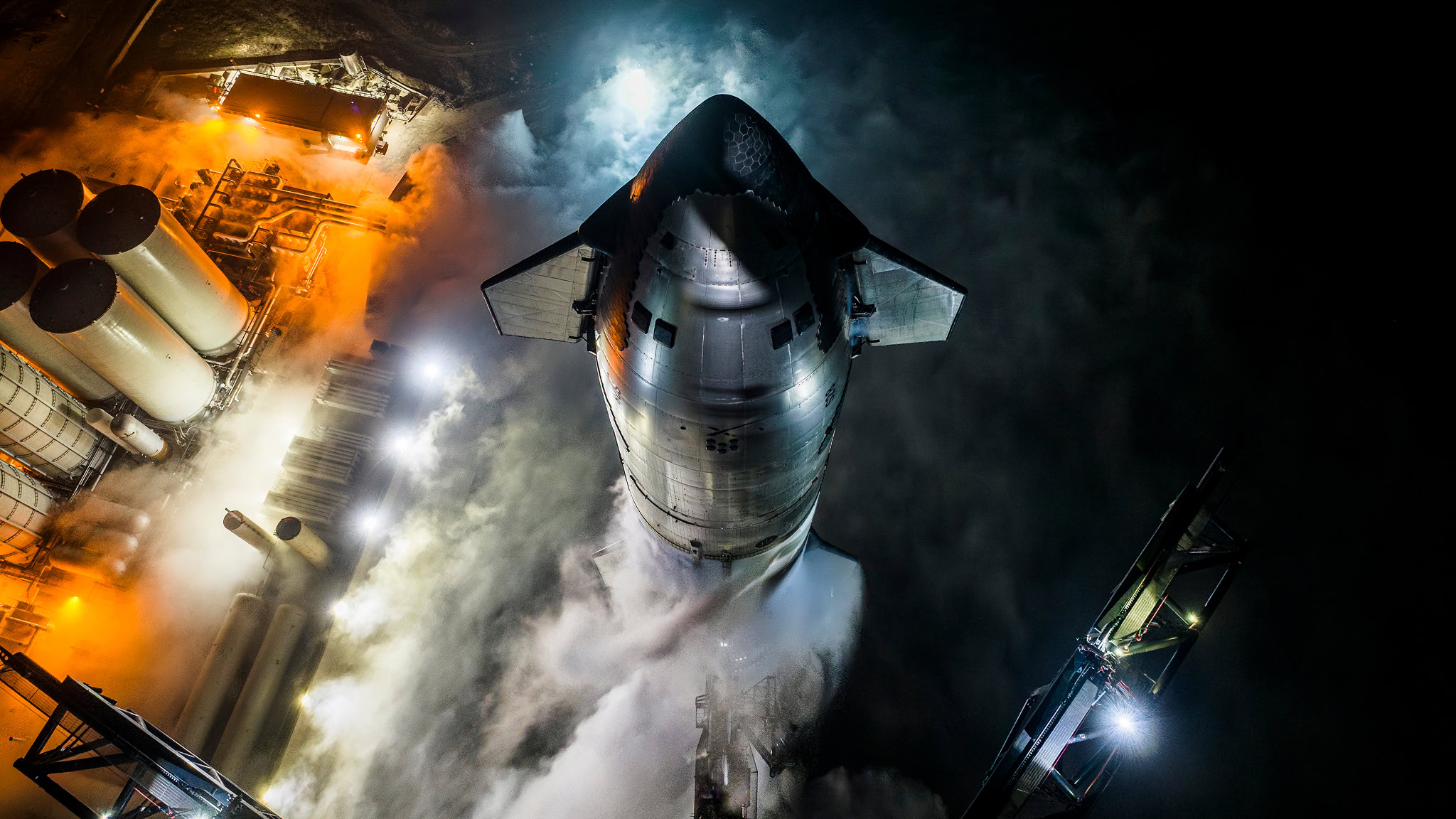

SpaceX has successfully raised $75 billion (£56 billion) from financial firms in preparation for its public trading debut on Friday, marking what is anticipated to be the highest-value stock listing in history.
In a recent filing with the US Securities and Exchange Commission, the space exploration and artificial intelligence (AI) company announced it sold shares priced at $135 each. This share price aligns with SpaceX’s estimate from last week, positioning the firm’s expected initial stock market value at nearly $1.8 trillion.
If this valuation holds, CEO Elon Musk, already the world’s richest person, is on track to become the first trillionaire.
Once trading begins, the share value may fluctuate based on the number of shares available and the demand from investors. Should the shares sell at or above $135, SpaceX would instantly rank among the most valuable public companies globally.
Investor interest in SpaceX is expected to be robust, with both institutional funds and retail investors eager to acquire stakes in the company. Some financial analysts have already projected target prices exceeding the $135 estimate, including Oppenheimer, which anticipates a share price of $190.
The final public share price will be determined through an auction process on the open stock market.
Tom Mueller, SpaceX’s first official employee and now founder of Impulse Space, expressed amazement at the company’s evolution, recalling its early challenges, including rocket engine failures and a successful orbital launch in 2008.
This listing on the technology-focused Nasdaq index is seen as a potential benchmark for other companies with private valuations nearing $1 trillion, such as Anthropic and OpenAI, both of which are reportedly preparing to go public this year.
Despite becoming a public entity, Musk will retain significant control over SpaceX. His combined holdings of Class A and Class B shares will allow him to maintain approximately 40% of the company’s total equity, translating to over 84% voting power.
In comparison, Mark Zuckerberg, co-founder of Meta, holds around 60% voting control in his company, which is considerably less than Musk’s dominance at SpaceX.
With Musk’s consolidated control, SpaceX may not require independent directors on its board, raising potential risks for investors, as insiders will have the authority to make critical business decisions, including acquisitions and executive compensation.
Notably, SpaceX has already acquired Musk’s startup xAI, which itself purchased the social media platform X in 2025, a platform Musk acquired in 2022.
The BBC’s Michelle Fleury interviewed Tom Mueller, one of the company’s founders alongside Musk in 2002, highlighting the remarkable journey of the world’s richest person, who may soon achieve trillionaire status.
Source link documentation provided originally via External Feed.